Have you ever looked up at the sky and felt inspired to capture the beauty of clouds on paper? Cloud drawing isn’t just child’s play—it’s a powerful way to connect with nature, boost creativity, and even improve mindfulness. Whether you’re a beginner or a seasoned artist, mastering cloud drawing can open new dimensions in your artistic journey.
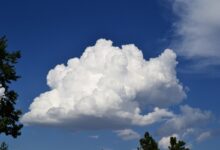
What Is Cloud Drawing and Why It Matters

Cloud drawing is the artistic practice of sketching or painting clouds as they appear in the sky. It goes beyond simple doodling—it’s about observing atmospheric conditions, light, shadow, and form to create realistic or stylized representations of these ever-changing sky sculptures. Artists, designers, and even scientists use cloud drawing to study weather patterns, enhance visual literacy, and express emotion.
The Artistic Definition of Cloud Drawing
At its core, cloud drawing is a form of observational art. Unlike still-life drawing, where subjects remain static, cloud drawing challenges artists to capture fleeting moments. The dynamic nature of clouds—shifting shapes, evolving textures, and changing light—makes this a uniquely demanding yet rewarding practice.
- It emphasizes real-time observation and quick sketching.
- It blends scientific accuracy with creative interpretation.
- It’s used in art therapy to promote relaxation and focus.
Historical Significance of Cloud Drawing
Cloud drawing has deep roots in both art and science. Long before modern meteorology, artists and naturalists sketched clouds to understand weather patterns. Leonardo da Vinci filled his notebooks with cloud studies, noting how light interacted with vapor. In the 19th century, John Constable, the English landscape painter, made hundreds of cloud sketches to perfect the skies in his paintings.
“The sky is the source of light in nature, and governs everything.” – John Constable
These early cloud drawings were not just artistic exercises—they were scientific records. Today, institutions like the UK Met Office still reference historical cloud art to understand climate change.
The Science Behind Clouds and How It Influences Cloud Drawing
To draw clouds realistically, you must first understand what they are. Clouds are visible masses of water droplets or ice crystals suspended in the atmosphere. Their shape, color, and movement depend on temperature, humidity, wind, and altitude. This scientific foundation is crucial for accurate cloud drawing.
Cloud Classification and Its Role in Art
The World Meteorological Organization (WMO) classifies clouds into ten basic types, grouped into three altitude levels: high, middle, and low. Knowing these types helps artists depict clouds with authenticity.
- Cirrus: High-altitude, wispy clouds. Ideal for delicate pencil strokes.
- Altocumulus: Mid-level, patchy clouds. Great for practicing texture.
- Stratocumulus: Low, lumpy clouds. Perfect for broad brushwork.
- Nimbus: Rain-bearing clouds. Require dark shading and dramatic contrast.
For artists, this classification isn’t just academic—it’s a visual toolkit. A well-executed cloud drawing reflects not just shape, but mood and weather.
Light, Shadow, and Atmospheric Perspective
One of the biggest challenges in cloud drawing is rendering light and shadow. Clouds don’t have solid edges; they diffuse light in complex ways. The top of a cloud is usually brighter due to direct sunlight, while the underside appears darker due to shadow and atmospheric depth.
- Use soft gradients instead of hard lines.
- Observe how clouds cast shadows on each other.
- Consider the time of day—morning light is softer, while midday creates high contrast.
Mastering atmospheric perspective—how objects appear less distinct with distance—adds depth to your cloud drawing. Distant clouds look lighter and bluer, while closer ones are more defined and warmer in tone.
Essential Tools and Materials for Cloud Drawing
The right tools can make or break your cloud drawing experience. While some artists prefer digital platforms, many still rely on traditional media to capture the organic flow of clouds.
Traditional Media for Cloud Drawing
Pencil, charcoal, pastel, and watercolor remain popular choices for cloud drawing. Each medium offers unique advantages:
- Pencil: Ideal for beginners. Allows precise control and easy erasing.
- Charcoal: Creates deep blacks and soft gradients—perfect for storm clouds.
- Chalk or Pastel: Blends easily, mimicking the soft edges of clouds.
- Watercolor: Captures translucency and light effects beautifully.
For outdoor cloud drawing, a sketchbook with thick paper and a portable pencil case are essential. Consider using a clipboard to stabilize your paper in the wind.
Digital Tools and Apps for Modern Cloud Drawing
Digital art has revolutionized cloud drawing. Tablets like the iPad with Apple Pencil and software like Procreate or Adobe Fresco allow artists to experiment with layers, opacity, and brushes that simulate real media.
- Use soft airbrush tools for cloud edges.
- Adjust layer opacity to build volume gradually.
- Save multiple versions to track progress.
Apps like Procreate offer time-lapse recording, letting you review your cloud drawing process and improve technique.
Step-by-Step Guide to Creating a Realistic Cloud Drawing
Creating a compelling cloud drawing involves more than just sketching shapes. It’s a process of observation, planning, and execution. Follow this step-by-step guide to elevate your skills.
Step 1: Observe and Sketch the Basic Shape
Begin by studying the sky. Don’t rush to draw. Spend 5–10 minutes observing how the cloud moves, its overall form, and its relationship to other clouds. Use light, loose lines to sketch the general outline.
- Avoid hard edges—clouds are soft and fluid.
- Focus on the silhouette first, not details.
- Use negative space to define cloud boundaries.
Step 2: Build Volume with Light and Shadow
Once the shape is set, identify the light source. Typically, the sun is above, so the top of the cloud is brightest. Use gradual shading to create volume.
- Leave the top areas white or lightly shaded.
- Gradually darken the lower sections.
- Use a blending stump or finger to smooth transitions.
Remember, clouds are three-dimensional. Even flat-looking clouds have depth when viewed correctly.
Step 3: Add Texture and Atmospheric Effects
This is where your cloud drawing comes to life. Use short, feathery strokes for cirrus clouds or rounded dabbing motions for cumulus. Avoid overworking the paper—clouds should look airy, not dense.
- For storm clouds, use cross-hatching to create density.
- For sunrise/sunset clouds, add warm hues like orange and pink.
- Use a kneaded eraser to lift graphite and create highlights.
Atmospheric effects like haze or distant rain can be suggested with light washes or faint lines.
Cloud Drawing Techniques from the Masters
Learning from legendary artists can dramatically improve your cloud drawing skills. Their methods, though developed centuries ago, remain relevant today.
John Constable’s Cloud Studies
Constable’s cloud sketches, done in Hampstead Heath around 1821–1822, are masterclasses in observation. He labeled each sketch with the date, time, wind direction, and weather conditions—treating art like science.
- He used watercolor and pencil on paper.
- He focused on the sky as the “key note” of a landscape.
- His sketches were never meant for public display but were studies for larger works.
You can view his cloud drawings at the Victoria and Albert Museum online.
Leonardo da Vinci’s Atmospheric Sketches
Da Vinci was obsessed with the movement of air and water. His cloud drawings, found in the Codex Leicester, show swirling patterns and vapor trails, reflecting his understanding of fluid dynamics.
- He used silverpoint and ink for fine detail.
- He believed clouds were windows into the soul of nature.
- His sketches often included notes on wind speed and moisture.
Studying da Vinci teaches us that cloud drawing is not just visual—it’s intellectual.
Cloud Drawing for Mindfulness and Mental Wellness
Beyond art and science, cloud drawing has therapeutic value. It’s a form of active meditation that calms the mind and enhances present-moment awareness.
How Cloud Drawing Reduces Stress
Focusing on the slow movement of clouds forces you to slow down. The act of drawing requires concentration, which distracts from anxious thoughts. This is similar to mindfulness practices used in cognitive behavioral therapy (CBT).
- Reduces mental chatter by anchoring attention to the present.
- Encourages deep breathing and relaxed posture.
- Provides a sense of accomplishment without pressure.
A 2020 study published in Art Therapy: Journal of the American Art Therapy Association found that nature-based drawing activities significantly reduced cortisol levels in participants.
Cloud Drawing as a Daily Creative Ritual
Many artists and writers incorporate cloud drawing into their daily routines. It’s a low-pressure way to warm up creativity. Even 10 minutes a day can improve observational skills and emotional regulation.
- Try a “cloud journal” where you sketch one cloud each day.
- Pair it with journaling—write how the cloud makes you feel.
- Use it as a break from screen time.
This ritual isn’t about perfection—it’s about presence.
Common Mistakes in Cloud Drawing and How to Fix Them
Even experienced artists make mistakes when drawing clouds. Recognizing these errors is the first step to improvement.
Mistake 1: Hard Edges and Overdefined Lines
One of the most common errors is treating clouds like solid objects. Beginners often outline clouds with dark, sharp lines, making them look like cotton balls glued to the sky.
- Solution: Use soft pencils (2B–6B) and blend edges.
- Solution: Lift graphite with an eraser to create soft transitions.
- Solution: Study real photos or skies to see how edges fade.
Mistake 2: Flat, Two-Dimensional Appearance
Clouds are not flat. If your drawing looks like a sticker on paper, you’re missing volume.
- Solution: Identify the light source and shade accordingly.
- Solution: Use a range of values from white to black.
- Solution: Add subtle shadows where clouds overlap.
Mistake 3: Ignoring the Sky Background
The sky isn’t just empty space—it’s part of the composition. A poorly rendered sky can ruin an otherwise good cloud drawing.
- Solution: Use a light blue wash or gradient for the sky.
- Solution: Make the sky darker near the top and lighter near the horizon.
- Solution: Let the cloud edges interact with the sky tone.
Cloud Drawing in Education and STEM Learning
Cloud drawing is increasingly used in schools to teach science, art, and environmental awareness. It bridges disciplines in a way few activities can.
Teaching Meteorology Through Cloud Drawing
In elementary and middle schools, teachers use cloud drawing to introduce weather concepts. Students sketch clouds and classify them using the WMO system. This hands-on approach improves retention and engagement.
- Students learn to predict weather based on cloud types.
- They develop observational and descriptive skills.
- It encourages outdoor learning and curiosity.
Organizations like The GLOBE Program include cloud observation and drawing in their citizen science curriculum.
Integrating Art and Science in the Classroom
Cloud drawing exemplifies STEAM education (Science, Technology, Engineering, Arts, and Mathematics). It shows students that art and science are not opposites but complementary ways of understanding the world.
- Students analyze cloud formation scientifically.
- They express their findings artistically.
- They present their work in portfolios or class exhibitions.
This interdisciplinary approach fosters creativity, critical thinking, and communication.
Advanced Cloud Drawing Projects and Challenges
Once you’ve mastered the basics, it’s time to push your limits. Advanced projects help refine technique and deepen understanding.
Time-Lapse Cloud Drawing Series
Set up a sketchbook and draw the same patch of sky every 15 minutes for an hour. This reveals how clouds evolve and teaches patience and adaptability.
- Use a grid to keep compositions aligned.
- Note time and weather conditions for each sketch.
- Compare changes in shape, density, and light.
This project is excellent for understanding atmospheric dynamics.
Cloud Drawing from Memory and Imagination
After practicing observation, try drawing clouds from memory. This strengthens visual recall and creative expression. You can also invent surreal cloudscapes—floating islands, glowing auroras, or dreamlike formations.
- Combine real cloud types in fictional ways.
- Use color symbolism—red for anger, blue for calm.
- Experiment with mixed media: ink, collage, digital overlays.
This bridges realism and fantasy, expanding your artistic range.
Cloud Drawing Communities and Online Resources
You’re not alone in your passion for cloud drawing. A growing global community shares tips, challenges, and inspiration online.
Joining Cloud Drawing Challenges
Platforms like Instagram and Reddit host monthly cloud drawing challenges. Hashtags like #CloudDrawingChallenge or #SkySketch encourage participation and feedback.
- Builds accountability and motivation.
- Connects you with artists worldwide.
- Exposes you to diverse styles and techniques.
These challenges often have themes: “Sunset Clouds,” “Stormy Skies,” or “Minimalist Clouds.”
Recommended Books and Online Courses
To deepen your knowledge, consider structured learning. Here are some top resources:
- Clouds: A Photographic and Scientific Journey by Gavin Pretor-Pinney (founder of the Cloud Appreciation Society).
- The Artist’s Guide to Sketching by Carl Schofield—includes excellent sections on sky and cloud rendering.
- Udemy course: Watercolor Skies and Clouds—practical video lessons.
- YouTube channels like Draw with Jazza and Proko offer free cloud drawing tutorials.
The Cloud Appreciation Society is a must-join for enthusiasts, offering a gallery, forums, and a newsletter.
What is the best pencil for cloud drawing?
For cloud drawing, a soft graphite pencil (2B to 6B) works best because it allows for smooth shading and easy blending. Hard pencils (like H or 2H) are too light and scratchy for the soft textures of clouds. Many artists also use a kneaded eraser to lift graphite and create highlights, mimicking the luminous parts of clouds.
How do I make my cloud drawings look more realistic?
To make cloud drawings look realistic, focus on three things: soft edges, proper shading, and atmospheric perspective. Avoid outlining clouds with hard lines. Instead, use gradual transitions from light to dark. Observe real clouds to see how light hits the top and shadows form underneath. Also, remember that distant clouds appear lighter and less detailed than those nearby.
Can I do cloud drawing digitally?
Absolutely! Digital tools like Procreate, Adobe Fresco, and Corel Painter offer brushes and layers that make cloud drawing easier and more flexible. You can adjust opacity, blend modes, and undo mistakes instantly. Many artists prefer digital for its precision and portability, especially when combined with a tablet and stylus.
Do I need to know meteorology to draw clouds?
While not required, understanding basic meteorology enhances your cloud drawing. Knowing the difference between cumulus and cirrus clouds, for example, helps you draw them more accurately. It also adds depth to your work—storm clouds should look heavy and dark, while high-altitude cirrus should appear thin and wispy. A little science goes a long way in art.
How long should I spend on a single cloud drawing?
There’s no fixed time—it depends on your goal. A quick sketch can take 5–10 minutes and is great for capturing movement. A detailed, realistic drawing might take 30–60 minutes. For beginners, start with short sessions to build observation skills. Over time, you’ll develop the patience for longer, more complex pieces.
Cloud drawing is far more than a simple artistic exercise—it’s a bridge between art and science, observation and emotion, tradition and innovation. From the meticulous studies of John Constable to modern digital creations, cloud drawing continues to inspire and challenge artists of all levels. Whether you’re sketching for relaxation, education, or creative growth, the sky is not the limit—it’s the canvas. By mastering the techniques, avoiding common pitfalls, and connecting with a global community, you can turn your passion for clouds into a powerful form of expression. So grab your sketchbook, look up, and let the clouds guide your hand.
Further Reading:
