Imagine stumbling upon a golden berry hidden in the wild, tucked beneath mossy tundra and boreal forests. That’s the cloudberry—a rare, delicate fruit with a flavor as enchanting as its legend. Revered across Nordic and Arctic regions, this golden gem is more than just a treat; it’s a symbol of resilience, tradition, and natural wellness.
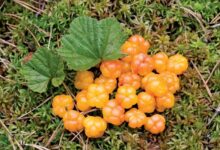
What Is Cloudberry? A Botanical and Cultural Introduction

The cloudberry, scientifically known as Rubus chamaemorus, is a perennial plant that thrives in cold, northern climates. Found across Scandinavia, Russia, Canada, and parts of the Baltic states, it grows in peat bogs, moist tundra, and high-altitude forests. Unlike its thorny cousins like blackberries and raspberries, the cloudberry plant is thornless, with delicate white flowers and soft, maple-like leaves.
Botanical Characteristics of Cloudberry
The cloudberry plant belongs to the Rosaceae family and is unique in its growth pattern and fruit structure. Its fruit is an aggregate, similar to raspberries, but with a more translucent, amber-golden appearance when ripe. The berries start green, turn red, and finally ripen to a golden-orange hue—often in mid to late summer.
- Low-growing herbaceous plant, typically 10–25 cm tall
- Flowers are solitary, white, and have five petals
- Fruit consists of 5–25 drupelets, each containing a single seed
- Plants are dioecious—male and female flowers grow on separate plants
This dioecious nature makes pollination crucial and often limits yield, contributing to the cloudberry’s rarity. Bees and other pollinators play a vital role in fruit set, and without them, the plant may not produce berries at all.
Cultural Significance Across the North
The cloudberry has long held a special place in the cultures of northern peoples. In Finland, it’s known as lakka and is so cherished that it’s featured on Finnish euro coins. In Sweden, it’s called hjortron, and in Norway, multe. Indigenous Sami people have foraged cloudberries for centuries, using them not only as food but also in traditional medicine.
“The cloudberry is the gold of the bog—rare, fleeting, and deeply nourishing.” — Nordic Forager Proverb
In many Arctic communities, the annual cloudberry harvest is a social event, bringing families and neighbors together to gather the fruit in the short summer window. Its scarcity and seasonal availability have elevated it to near-mythical status in Scandinavian folklore.
Where Does Cloudberry Grow? Geographic and Environmental Insights
Cloudberry is not a plant you’ll find in your average garden. It has very specific environmental needs, which is why it remains largely wild-harvested rather than cultivated on a large scale.
Natural Habitat and Climate Requirements
Cloudberries thrive in cool, moist climates with long winters and short summers. They are most commonly found between latitudes 55°N and 75°N, particularly in:
- Boreal forests of Scandinavia (Norway, Sweden, Finland)
- Peat bogs of Estonia, Latvia, and Russia
- Subarctic regions of Canada and Alaska
- High-altitude areas in the Scottish Highlands
These regions provide the acidic, nutrient-poor soils that cloudberries prefer. The plant favors partially shaded, damp environments, often growing alongside sphagnum moss and sedges in wetlands.
Challenges in Cultivation
Despite growing interest in commercial cloudberry farming, large-scale cultivation remains challenging. The plant’s dioecious nature means both male and female plants must be present for pollination. Additionally, cloudberries are slow to establish, taking 2–3 years to produce fruit, and are highly sensitive to soil pH, moisture, and competition from other plants.
Researchers in Finland and Norway have made progress in developing cultivars and propagation techniques. For example, the Finnish Agricultural Research Centre has experimented with tissue culture and controlled greenhouse environments to improve yield. However, most commercial cloudberry products still rely on wild harvesting.
For more on cultivation efforts, visit the Norwegian Institute of Bioeconomy Research (NIBIO), which leads studies on sustainable cloudberry farming.
Cloudberry Nutrition: A Powerhouse of Vitamins and Antioxidants
Don’t let its delicate appearance fool you—the cloudberry is a nutritional powerhouse. Packed with vitamins, minerals, and bioactive compounds, it’s one of the most nutrient-dense berries in the world.
Vitamin C Content: Surpassing Oranges
One of the most remarkable features of the cloudberry is its exceptionally high vitamin C content. A 100-gram serving can contain up to 100–200 mg of vitamin C—nearly double that of an orange. This makes it a vital source of immune support, especially in remote northern communities where fresh fruits are scarce for much of the year.
Vitamin C also acts as a powerful antioxidant, helping to neutralize free radicals and reduce oxidative stress in the body. This is particularly important in cold climates, where metabolic demands are higher.
Rich in Ellagic Acid and Other Antioxidants
Cloudberries are among the richest natural sources of ellagic acid, a polyphenol with potent anti-inflammatory and anticancer properties. Studies have shown that ellagic acid can inhibit tumor growth and support DNA repair.
- Ellagic acid levels in cloudberries are significantly higher than in strawberries or raspberries
- Also contains quercetin, anthocyanins, and other flavonoids
- High in omega-3 and omega-6 fatty acids, rare for a fruit
These compounds contribute to the cloudberry’s reputation as a “superfruit” with potential benefits for heart health, skin regeneration, and cognitive function.
Health Benefits of Cloudberry: From Immunity to Anti-Aging
Beyond its impressive nutrient profile, the cloudberry offers a range of health benefits supported by both traditional use and modern science.
Boosts Immune System Function
Thanks to its sky-high vitamin C content, the cloudberry is a natural immune booster. Regular consumption can help reduce the duration and severity of colds and infections. In traditional medicine, cloudberry juice or syrup was often given to children and the elderly during winter months to prevent illness.
Additionally, the berry’s antimicrobial properties may help combat certain pathogens. A study published in the Journal of Functional Foods found that cloudberry extracts inhibited the growth of Staphylococcus aureus and Escherichia coli.
Supports Skin Health and Anti-Aging
The cloudberry has become a star ingredient in high-end skincare products, particularly in Nordic beauty brands. Its oil, extracted from the seeds, is rich in vitamin A, vitamin E, and essential fatty acids, making it excellent for moisturizing and protecting the skin.
Cloudberry seed oil is known for:
- Reducing inflammation and redness
- Improving skin elasticity and reducing fine lines
- Protecting against UV damage due to high antioxidant content
Brands like Lumene, a Finnish skincare company, have built entire product lines around cloudberry extracts, touting its “Arctic radiance” effect.
Cloudberry in Cuisine: Traditional and Modern Culinary Uses
The cloudberry’s unique flavor—tart, floral, and slightly musky—makes it a prized ingredient in both traditional and gourmet cooking.
Traditional Nordic Recipes
In Scandinavia, cloudberries are often enjoyed simply, with a sprinkle of sugar or a dollop of cream. Some classic preparations include:
- Lakka: A Finnish cloudberry jam, often served with pancakes or waffles
- Multekrem: A Norwegian dessert made with whipped cream and fresh cloudberries
- Hjortronpaj: A Swedish cloudberry pie with a buttery crust
The berries are also fermented into liqueurs and wines. In Russia, cloudberry vodka is a regional specialty, prized for its smooth, earthy flavor.
Modern Gourmet Applications
Chefs around the world are rediscovering the cloudberry’s potential. Its complex flavor profile pairs well with game meats, cheeses, and desserts. High-end restaurants in Copenhagen, Stockholm, and Helsinki often feature cloudberry in:
- Reduction sauces for reindeer or venison
- Sorbets and mousses
- Cocktails and craft sodas
Due to its scarcity, fresh cloudberries are often replaced with frozen or preserved versions in professional kitchens. However, the demand for authentic, sustainably sourced cloudberry products is growing.
Cloudberry in Skincare and Cosmetics
The beauty industry has embraced the cloudberry for its regenerative and protective properties. Its oil and extracts are now found in serums, moisturizers, and anti-aging creams.
Cloudberry Seed Oil: Nature’s Moisturizer
Extracted from the tiny seeds within the berry, cloudberry seed oil is rich in:
- Omega-3 and omega-6 fatty acids (linolenic and linoleic acid)
- Vitamin E (tocopherols), a powerful antioxidant
- Phytosterols, which help repair the skin barrier
These components make it ideal for dry, sensitive, or mature skin. Unlike heavier oils, it absorbs quickly without clogging pores.
Scientific Backing for Skincare Benefits
Research supports the use of cloudberry in dermatology. A 2018 study in the International Journal of Cosmetic Science found that cloudberry extract significantly improved skin hydration and reduced transepidermal water loss after four weeks of use.
Another study highlighted its ability to inhibit melanin production, suggesting potential for brightening dark spots and evening skin tone.
Sustainability and Conservation of Cloudberry
As demand for cloudberry grows, so do concerns about overharvesting and habitat loss. Sustainable practices are essential to preserve this fragile species.
Wild Harvesting Practices and Regulations
In many countries, cloudberry picking is regulated to prevent overexploitation. In Finland, for example, anyone can forage cloudberries on public land under the “everyman’s right” (jokamiehenoikeus), but commercial harvesting requires permits.
In Sweden, local municipalities often manage harvesting quotas to ensure long-term sustainability. Some regions have implemented rotational picking schedules to allow plants time to recover.
Threats from Climate Change
Climate change poses a significant threat to cloudberry habitats. Rising temperatures, altered precipitation patterns, and increased frequency of wildfires are disrupting the delicate ecosystems where cloudberries grow.
- Warmer summers may dry out peat bogs, reducing fruit yield
- Earlier snowmelt can expose plants to late frosts
- Invasive species may outcompete native cloudberry populations
Conservationists are calling for greater monitoring and protection of cloudberry-rich wetlands. Organizations like the International Union for Conservation of Nature (IUCN) are assessing the vulnerability of Arctic plant species, including the cloudberry.
Cloudberry vs. Other Berries: How Does It Compare?
While cloudberries share a family with raspberries and blackberries, they stand out in several key ways.
Nutritional Comparison
Here’s how cloudberry stacks up against other popular berries (per 100g):
- Vitamin C: Cloudberry (100–200 mg) vs. Raspberry (26 mg) vs. Strawberry (59 mg)
- Ellagic Acid: Cloudberry (highest among berries) vs. Strawberry (moderate) vs. Blueberry (low)
- Fatty Acids: Cloudberry (contains omega-3 and omega-6) vs. Most berries (negligible)
This makes the cloudberry uniquely nutritious, especially for skin and immune health.
Flavor and Culinary Versatility
Cloudberries have a more complex flavor than most berries—tart, aromatic, and slightly resinous. They are less sweet than strawberries and more floral than blackberries. This makes them ideal for both sweet and savory dishes, though their delicate texture means they don’t hold up well to prolonged cooking.
Unlike blueberries, which are widely cultivated, cloudberries remain largely wild, adding to their exclusivity and premium price.
What does cloudberry taste like?
Cloudberry has a unique flavor profile—tart and tangy when underripe, developing into a rich, honey-like sweetness when fully ripe. It carries floral and musky notes, often compared to a blend of raspberry, apricot, and lychee.
Where can I buy cloudberry products?
Fresh cloudberries are rare outside the Nordic region, but you can find frozen berries, jams, syrups, and skincare products online. Specialty stores like Nordic Food or Amazon often carry imported cloudberry goods.
Is cloudberry good for your skin?
Yes. Cloudberry is rich in antioxidants, essential fatty acids, and vitamins A and E, all of which support skin health. Its seed oil is particularly effective for moisturizing, reducing inflammation, and protecting against environmental damage.
Can you grow cloudberry at home?
It’s challenging but possible. You’ll need acidic, moist soil, partial shade, and both male and female plants for pollination. Some nurseries in northern climates sell cultivated varieties, but yields are typically low.
Why is cloudberry so expensive?
Cloudberry is expensive due to its limited growing range, short harvest season, labor-intensive picking, and high demand. Most berries are wild-harvested, and cultivation is difficult, making supply scarce.
The cloudberry is more than just a berry—it’s a symbol of the wild, a treasure of the north, and a gift of nature with remarkable benefits. From its golden hue in the bog to its presence in gourmet kitchens and luxury skincare, the cloudberry continues to captivate. As we learn to appreciate and protect this delicate fruit, we also honor the cultures and ecosystems that have sustained it for generations. Whether you savor it in a jam, apply it to your skin, or simply admire its resilience, the cloudberry reminds us of nature’s quiet brilliance.
Further Reading:
